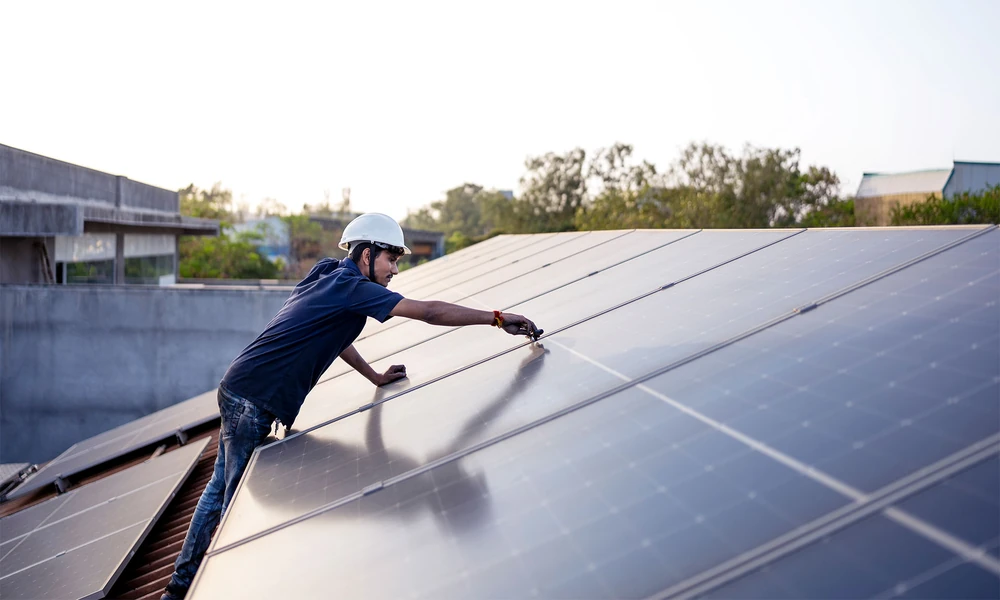
The rooftop solar loan has become the primary mechanism through which homeowners and businesses in India convert the solar energy interest into an actual installation without requiring the full capital investment upfront. Understanding the solar rooftop loan interest rate landscape, what determines the rate a specific customer will receive, how the application and approval process works, and what to look for in a loan for solar rooftop installations helps potential solar customers approach the financing decision with the knowledge needed to secure the best available terms.
What is a rooftop solar loan?
A rooftop solar loan is a purpose-specific credit facility extended to finance the cost of a grid-connected rooftop solar photovoltaic installation. The loan may be structured as a personal loan (unsecured), a secured loan against the property or the solar asset, or as part of a government-backed scheme such as PM-Surya Ghar that provides concessional interest rates for eligible residential customers. The distinguishing feature of a loan for solar rooftop installations relative to a general-purpose personal loan is the longer tenure and the purpose-specific character of the product, which is designed to match the repayment structure to the solar investment’s financial return profile.
What is the typical solar rooftop loan interest rate?
Solar rooftop loan interest rate varies across a range determined by the lender type, the customer’s credit profile, the loan amount and tenure, and whether the loan is part of a government-backed scheme:
- PM-Surya Ghar scheme concessional loans: the PM-Surya Ghar scheme provides eligible residential customers with access to solar loans at concessional interest rates through empanelled banks and NBFCs. The scheme’s concessional rate structure makes these the lowest available rates for qualifying residential customers
- Nationalised bank solar loans: public sector banks offer dedicated solar loan products at interest rates typically ranging from 7 to 10 per cent per annum on a reducing balance for residential customers with good credit history. These rates are generally lower than NBFC rates but may come with more stringent documentation requirements
- NBFC solar loans: NBFCs and specialist solar financing companies offer solar rooftop loans at rates typically ranging from 10 to 14 per cent per annum, with faster processing and lighter documentation requirements than nationalised banks. For customers who need a faster approval or who may not qualify for a bank product, the NBFC rate premium is often a worthwhile trade-off
- Solar installation loan for commercial customers: commercial solar loans are typically priced at rates that reflect the commercial credit assessment of the business, ranging from 10 to 15 per cent per annum depending on the borrower’s profile and the lender’s product
What factors determine the solar rooftop loan interest rate for a specific customer?
The solar rooftop loan interest rate that a specific customer receives is determined by:
- CIBIL score and credit history: a higher CIBIL score, indicating a strong repayment history across previous credit obligations, is the single most influential factor in the interest rate offered. Customers with CIBIL scores above 750 typically qualify for the lower end of the applicable rate range
- Income and repayment capacity: the loan amount relative to the customer’s net monthly income, and the total existing EMI obligations relative to income, determine the lender’s assessment of repayment risk, which is reflected in the rate offered
- Loan amount and tenure: larger loan amounts and shorter tenures typically attract lower rates in solar lending, as the lender’s per-rupee risk exposure is lower for a larger, shorter-tenure loan from a creditworthy borrower
- Lender’s product and scheme: whether the loan is being accessed under a government scheme, a nationalised bank product, or an NBFC product determines the starting rate, with government scheme rates typically lowest and NBFC rates highest
How does the solar installation loan application process work?
The solar installation loan application process for a rooftop solar installation typically follows a structured sequence:
- Solar system quotation: the installation company provides a detailed quotation covering system specification, component brands, installation charges, and the net cost after applicable subsidies. This quotation forms the basis of the loan application
- Loan application submission: the customer submits the loan application with identity, address, income documentation, and the installation quotation. For PM-Surya Ghar loans, the application also includes the Udyam or Aadhaar details and the DISCOM registration confirmation
- Credit assessment and sanction: the lender assesses the application and sanctions the loan at the offered rate and tenure, typically within three to seven business days for NBFC products and one to two weeks for bank products
- Disbursement: the loan is disbursed to the installation company upon confirmation of the installation completion and the relevant commissioning documentation. For PM-Surya Ghar loans, the subsidy is applied to reduce the outstanding loan principal after the subsidy claim is processed by the government
Many companies provide rooftop solar loans, solar installation loan, and loan for solar rooftop products with competitive solar rooftop loan interest rates for residential and commercial customers across India. Solar financing platforms combine a fast digital application, transparent pricing, and the solar expertise that ensures customers access the right loan structure for the specific rooftop solar installation.
______________________________________________________________________________