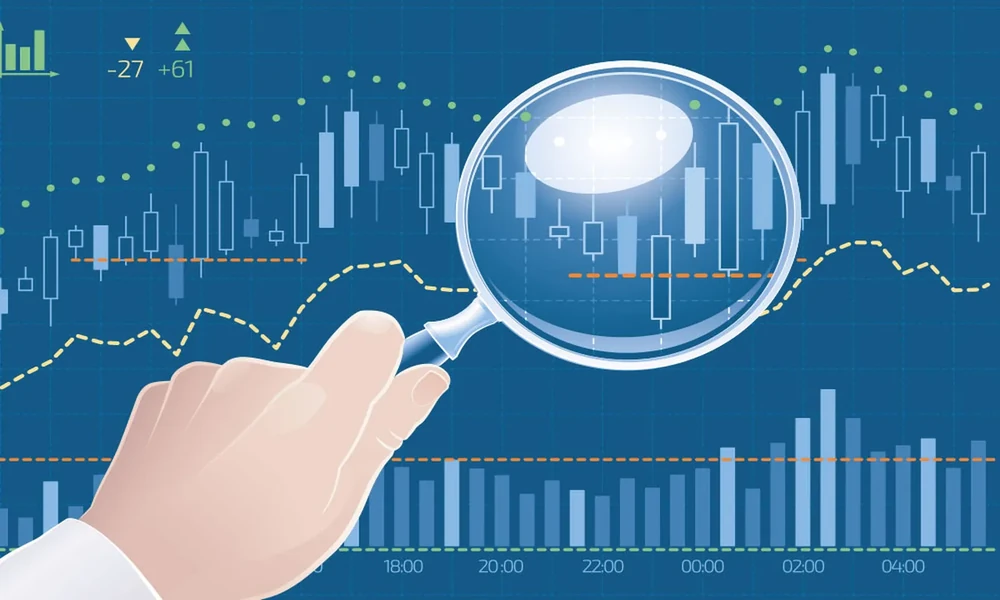
A Stock Screener helps investors reduce a large universe of listed companies into a smaller group that matches selected financial or market criteria. Instead of checking hundreds or thousands of stocks individually, users can apply filters such as market capitalisation, revenue growth, profitability, debt, valuation, or trading volume to identify companies worth researching further.
The important distinction is that screening is not the same as stock selection. A screener can identify candidates, but investors still need to study the underlying businesses, financial statements, valuations, industry conditions, and risks before making an investment decision.
The Real Value of Screening Is Reduction
The stock market contains companies from many industries, sizes, and financial profiles.
Reviewing all of them manually is inefficient.
A screener can reduce the search universe based on characteristics that matter to the investor.
For example, someone looking for financially stable companies may filter for:
- Positive earnings
- Moderate debt
- Consistent revenue
- Strong return ratios
- Adequate liquidity
Another investor may be looking specifically for growth companies and use a different set of criteria.
The screener becomes useful because it organises the search around a defined investment approach.
Filters Should Come From the Strategy
Using random filters can produce random results.
Before creating a screen, investors should decide what type of company they are trying to find.
Possible objectives may include:
- Growth
- Value
- Quality
- Dividend income
- Low debt
- Strong cash flow
Each approach requires different metrics.
A growth-oriented investor may focus on revenue and earnings expansion.
A value-oriented investor may pay greater attention to valuation ratios.
The criteria should reflect the investment thesis.
Market Capitalisation Can Narrow the Universe
Market capitalisation can be used to divide companies into broad size groups.
Investors may screen separately for:
- Large-cap companies
- Mid-cap companies
- Small-cap companies
These segments can differ in:
- Liquidity
- Business maturity
- Growth potential
- Volatility
A screen that works well for large established companies may be less useful for smaller businesses whose earnings can fluctuate more sharply.
Revenue Growth Needs Consistency
A company reporting one strong year of revenue growth may appear attractive.
A screener can help investors examine whether growth has been:
- Consistent
- Accelerating
- Irregular
- Declining
Looking at several years can provide better context.
However, screening alone does not explain why revenue changed.
Investors still need to determine whether growth came from:
- Higher volumes
- Price increases
- Acquisitions
- Temporary industry conditions
The number identifies the company. Research explains the number.
Profitability Filters Can Highlight Business Quality
Common profitability measures may include:
- Operating margin
- Net profit margin
- Return on equity
- Return on capital employed
A company producing consistently strong returns may deserve further investigation.
However, these ratios should be compared with industry peers.
A strong return ratio for one sector may be ordinary in another.
Cross-sector comparisons can therefore be misleading without context.
Debt Filters Can Remove Financially Stretched Companies
Investors concerned about financial risk may use debt-based screening criteria.
These may include:
- Debt-to-equity
- Interest coverage
- Total borrowings
High debt is not automatically negative.
Some industries naturally use more leverage than others.
The important issue is whether the business generates enough cash and earnings to manage its obligations.
A screener can identify highly leveraged companies, but the investor must understand why that leverage exists.
Cash Flow Can Strengthen a Screen
Profit figures are based on accounting rules.
Cash flow can provide another perspective.
A company may report increasing profit while struggling to convert those earnings into operating cash.
Investors may therefore include filters related to:
- Operating cash flow
- Free cash flow
- Cash-flow consistency
This can help identify businesses whose reported earnings are supported by actual cash generation.
Valuation Filters Need Business Context
A stock screener may allow investors to filter by:
- P/E ratio
- P/B ratio
- Enterprise-value multiples
Low valuation ratios can identify potentially inexpensive stocks.
But a low valuation may exist because:
- Growth is weak
- Debt is high
- Industry conditions are deteriorating
- Management quality is poor
A low multiple should therefore trigger research rather than an automatic purchase.
High Valuations Also Need Interpretation
A high valuation does not automatically mean a stock should be avoided.
Some companies command premium valuations because they have:
- Strong growth
- High profitability
- Low debt
- Durable competitive advantages
The investor needs to decide whether those strengths justify the premium.
A screener can show which companies are expensive. It cannot determine whether the market is pricing them correctly.
Liquidity Filters Can Improve Practicality
A company may look attractive fundamentally but trade very little.
Low trading activity can create:
- Wide bid-ask spreads
- Slippage
- Difficulty entering or exiting positions
Investors can use filters such as average traded volume to remove securities with insufficient liquidity for their strategy.
This can be particularly important for active traders and larger positions.
Screening Tools Work Better Inside a Broader Platform
A Demat Account App may combine stock screening with holdings, market data, company information, order placement, and portfolio tracking.
This can make the research-to-execution process more convenient because users can move from identifying a company to reviewing its details within the same ecosystem.
However, the convenience of one app should not encourage immediate action. A screened result should still pass deeper financial and qualitative analysis before capital is committed.
Sector Filters Can Reduce Unwanted Concentration
Investors may also screen within specific industries.
This can be useful when comparing companies exposed to similar economic conditions.
For example, analysing companies within one sector makes it easier to compare:
- Margins
- Growth
- Valuation
- Debt
It can also help investors avoid accidentally building a portfolio dominated by one industry.
Sector concentration should be reviewed after screening, not just after investing.
Technical Filters Can Serve a Different Purpose
Some screeners also provide technical criteria.
These may include:
- Moving averages
- Momentum
- Volume changes
- Price breakouts
These filters may be more useful to active traders than to long-term fundamental investors.
The purpose of the screen should remain clear.
Mixing unrelated technical and fundamental criteria without a defined strategy can produce results that are difficult to interpret.
A Screener Is Only as Good as Its Data
Users should understand:
- How frequently data updates
- Whether financial figures are consolidated or standalone
- How ratios are calculated
- Whether corporate actions are reflected correctly
Different platforms may occasionally display slightly different figures because of methodology or timing.
Important financial data should therefore be checked against company disclosures when necessary.
Too Many Filters Can Eliminate Useful Companies
Screening can become overly restrictive.
For example, an investor might demand:
- Very high growth
- Very low valuation
- No debt
- Extremely high profitability
Few companies may satisfy all conditions simultaneously.
More importantly, some strong businesses may be excluded because one metric temporarily falls outside the chosen threshold.
Screens should narrow the universe without pretending that investment quality can be reduced to one perfect formula.
Screening Should End With a Research List
A practical output from a screener may be a list of ten or twenty companies.
That list should then be researched individually.
Investors can examine:
- Annual reports
- Management commentary
- Competitive position
- Industry outlook
- Corporate governance
- Valuation
The screen therefore sits near the beginning of the research process rather than at the end.
Ranking Results Can Create False Precision
Some tools rank stocks automatically.
A stock listed first may appear objectively superior.
- Selected factors
- Data weights
- Calculation methodology
A ranking is an analytical shortcut, not a guarantee of investment quality.
Investors should understand what determines the score before relying on it.
Portfolio Fit Still Comes After Stock Quality
Even an attractive company may not improve an existing portfolio.
Suppose an investor already has significant exposure to financial companies.
A screened banking stock may be fundamentally strong but increase sector concentration.
The final decision should therefore consider:
- Existing holdings
- Sector exposure
- Position size
- Risk tolerance
Stock selection and portfolio construction are separate tasks.
Screeners Can Be Useful for Periodic Reviews
Screening does not need to happen every day.
Investors can use screens periodically to identify:
- New companies meeting criteria
- Existing holdings that no longer qualify
- Changes in valuation
- Financial deterioration
A scheduled review process can reduce unnecessary reactions to daily price changes.
Avoid Turning a Screen Into an Automatic Buy List
One of the biggest risks is assuming that every company passing a filter deserves investment.
A screener can miss qualitative factors such as:
- Governance concerns
- Regulatory risks
- Customer concentration
- Management changes
- Industry disruption
These issues may not appear clearly in numerical filters.
Human judgement remains necessary.
Screening and Diversified Investing Can Work Together
Not every investor needs to build an entire portfolio from individually screened stocks.
Some may combine direct equity research with Mutual Funds Sip contributions to maintain broader diversification while selectively researching individual companies.
The appropriate mix depends on the investor’s time, knowledge, risk tolerance, and willingness to monitor individual businesses.
Conclusion
A Stock Screener is most useful as a research filter rather than a final decision engine.
It can help investors narrow a large market universe using criteria such as growth, profitability, debt, cash flow, valuation, liquidity, and sector. The real work begins after the screen produces a shortlist.
Investors still need to understand the business, evaluate qualitative risks, compare valuations, and decide whether the company fits within the broader portfolio.
The strongest use of a screener is not finding a “perfect stock.” It is making the research process more focused, repeatable, and efficient.
FAQs
1. What is a Stock Screener?
A Stock Screener is a tool that filters listed companies based on selected financial, valuation, technical, or market criteria.
2. Can a stock screener tell me which stocks to buy?
No. It can identify companies matching selected conditions, but investors still need to conduct detailed research before making an investment decision.
3. Which filters are useful for beginners?
Beginners may start with basic factors such as revenue growth, profitability, debt, valuation, market capitalisation, and liquidity.
4. Why can two stock screeners show different results?
Different platforms may use different data sources, update schedules, ratio definitions, and calculation methodologies.
5. How often should investors use a stock screener?
There is no fixed frequency. Periodic screening can be useful for finding new research candidates or reviewing whether existing holdings still match the investor’s criteria.